
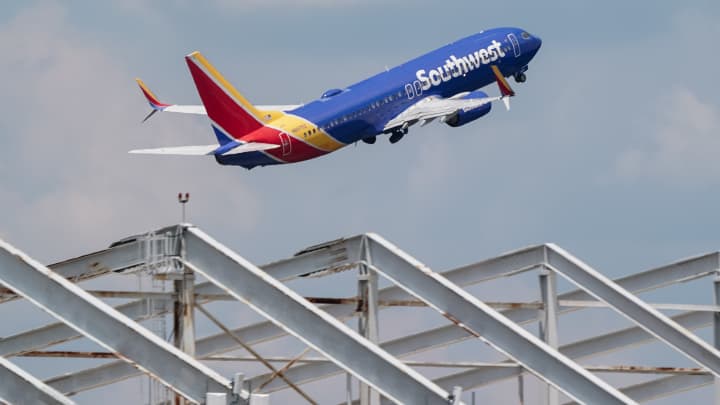

The itinerary came through my inbox on a Thursday afternoon in late September. Columbus to Phoenix, one stop, connection in Atlanta. Twice a week for work I fly that general direction, and my old habit was to route everything through Hartsfield-Jackson because Southwest flew it, so a schedule change email was not unusual. This one was. The first leg had been rebooked to leave at 6:10 a.m. instead of 11:40, which meant a 4 a.m. alarm and a four-hour layover, and the second leg had been moved to a different airline entirely, a thing Southwest almost never does. I still have the confirmation number.
The airline has confirmed it is pulling 11 routes out of Atlanta. The cuts start in January. Nonstop service to Columbus, Louisville, Memphis, Milwaukee, Oklahoma City, Omaha, Raleigh-Durham, San Antonio, and Tulsa simply disappears from the board, along with a couple of others. Southwest is also cutting frequencies on several Atlanta routes it is keeping, and reducing its overall footprint at the airport by roughly a third compared to its peak. If you live in one of those spoke cities, your nonstop to Atlanta is gone, and so is the easy one-stop connection through it to almost anywhere else. Eleven cities, one board.
Atlanta was Southwest’s way of stitching together a lot of medium-size cities that do not have enough demand to fill a nonstop to Phoenix, Denver, or Las Vegas on their own. Take away the stitch, and those cities either lose service or get an awkward connection through Denver, Chicago Midway, or Nashville, which adds a leg and a risk. On the Columbus-Phoenix pair, for example, the cheapest one-stop fares have crept from the low $200s to the mid-$300s for the same dates I was tracking last winter. Total travel time has grown by roughly two hours, because the connection is now longer than the flight. Mid-$300s. Same dates.
Pull up Kupi.com’s flights from Phoenix page and you can see the nonstop options that remain out of a Southwest stronghold, which is a useful reality check when the schedule change email arrives and you have thirty minutes to decide.
A few things worth checking before you rebook, in roughly the order that matters:
- Whether the new connection is a legal one or just barely, since a 45-minute connection in Atlanta in winter is not the same as one in June.
- Whether the fare difference is being absorbed by the airline or passed to you, because schedule changes over 90 minutes usually get you a free rebooking, but the booked price can still drift up when you pick a new date.
- Whether a different origin airport within an hour’s drive still has the nonstop you want.
- Whether the reroute adds a bag fee on the new carrier, which Southwest’s two-free-bags policy had been quietly absorbing.
The rebooking rules are where most travelers leave money on the table. Any schedule change of more than about an hour and a half generally qualifies you to move to a different flight, a different day, or in some cases a different city pair, at no cost, and you can often ask for a refund instead. What you cannot do is assume the agent will offer the best option. It helps to arrive with two or three alternatives already priced, including the Phoenix flight deals that show what the market is charging independent of your original ticket. If the new itinerary is worse and cheaper, say so and ask for the difference in the form of a travel credit, which they can usually issue on the spot.
If you were only passing through Atlanta, the cut costs you a connection and maybe two hours. If you were actually going to Atlanta, or leaving from one of those 11 cities, you now have one fewer airline bidding on your route, and that is the number that will show up in next year’s fares.

Comments are closed.